

















































































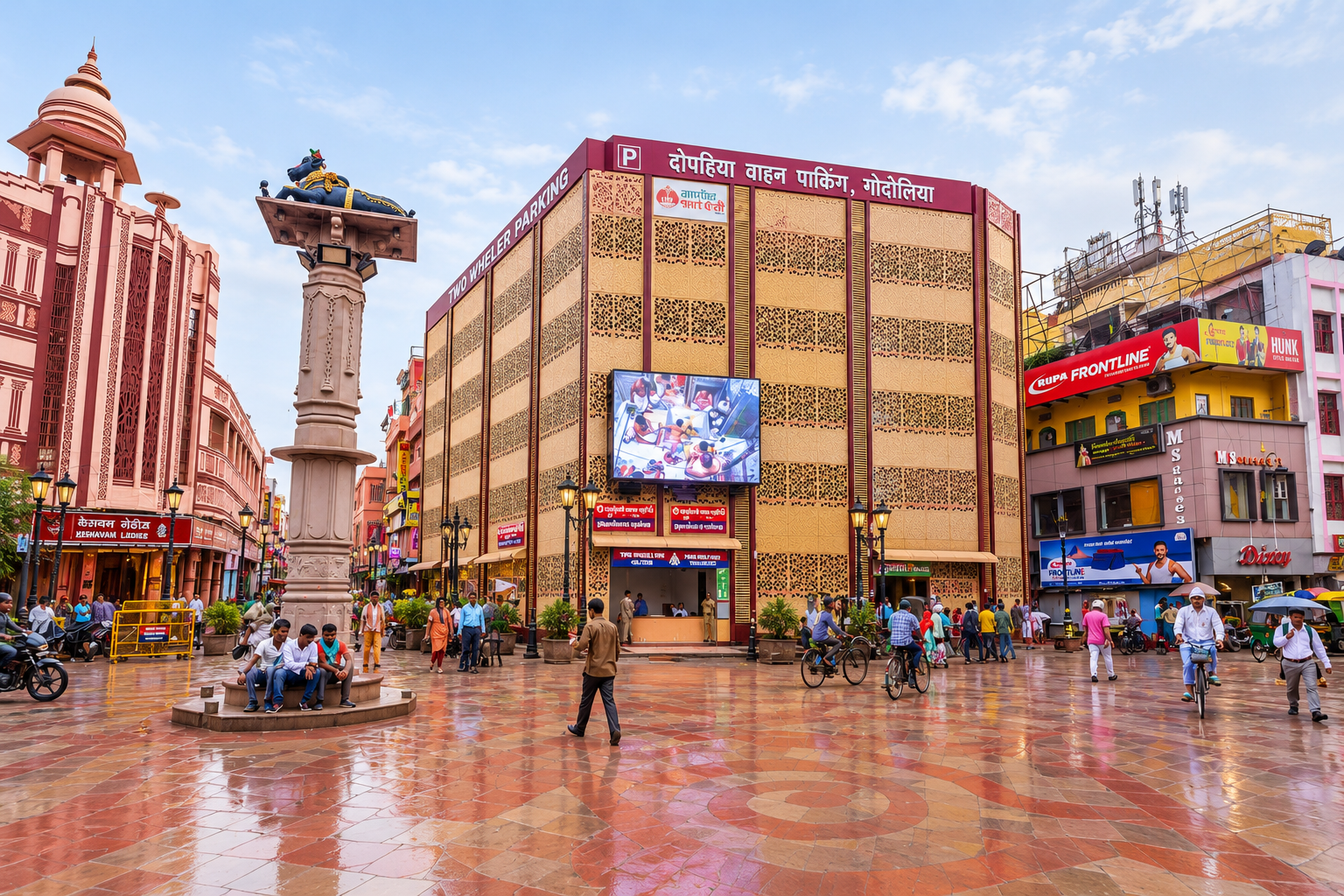
A busy two-wheeler facility doesn't have a demand problem. It has a collection problem. Cash changes hands at every gate, shifts hand over at every few hours, and what should have been earned and what was banked drift apart a little each day.
Godowlia didn't add a gate, a floor or a single person to earn more. It stopped losing what it was already owed.
Every entry is a record. A vehicle that comes in is a charge that must be settled at exit. Nothing leaves un-billed.
Every shift closes to the rupee. Expected against counted, per operator, with the difference visible at handover and not next week.
Pricing that follows the crowd. Time slabs and rates matched to Godowlia's real peaks, rather than one flat rate all day.
Regulars on passes. Daily riders move to monthly passes, which brings in predictable revenue and frees the gate.
Digital payments. Less cash on the floor, fewer disputes, and a payment trail that doesn't depend on anyone's memory.
A crossing that never sleeps needs parking that never sleeps. Each handover is where money usually goes missing, so each one is closed, counted and signed off in the system.
The biggest change at Godowlia isn't on a dashboard. Operators used to close a shift hoping the numbers would hold. Now they know before they leave, because the count, the exceptions and their own record are all in front of them. Disputes end at the gate and not in the office, and day-to-day confidence on the floor has gone up immensely.
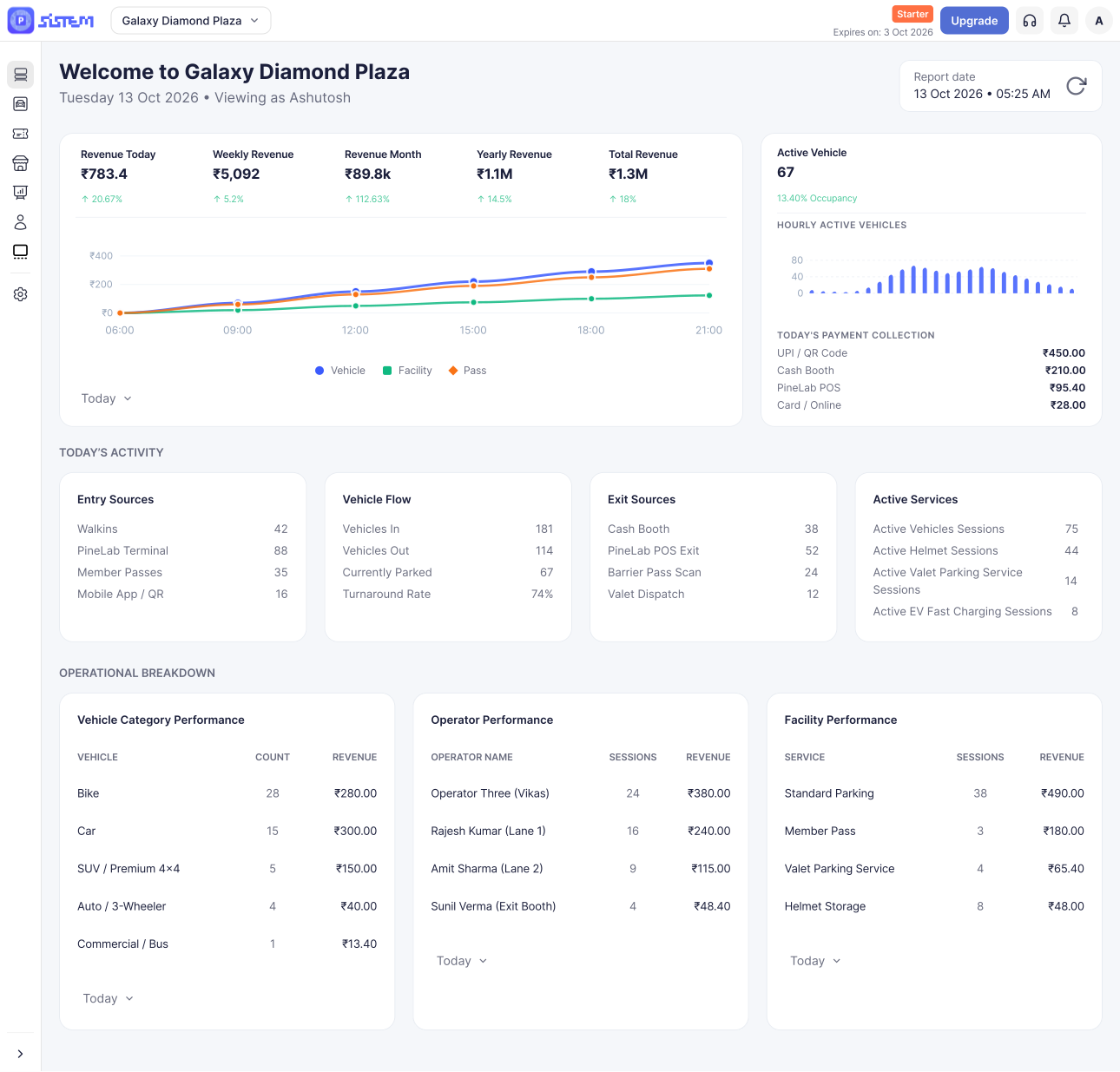
The people who run Godowlia don't compile reports. They open them.
Collections
Shift reconciliation
Occupancy
Operator activity
by payment method, by shift
expected vs counted, with exceptions
by floor, by hour
every action, time-stamped
Peak-hour detection shows when Godowlia is tightest, so staffing and rates follow the real pattern. Anomaly flags, such as an exit with no matching payment, and weekly insight summaries are rolling out on top of it.