



















































































Once you’ve found the report you need, SISTEM gives you two ways to actually get that data out of the dashboard: sharing it with someone else, or downloading it for yourself. They serve different purposes, so it’s worth knowing which one fits what you’re trying to do.
Why This Matters
A report sitting in your dashboard is only useful if it actually reaches the people who need it. Sometimes that means handing numbers to an accountant, an investor, or a team member who doesn’t have full SISTEM access. Other times, you just want a copy for your own records, or to bring into another tool for analysis.
SISTEM covers both of these with two distinct actions, so you’re not stuck choosing a workaround for either.
Choosing a Time Range First
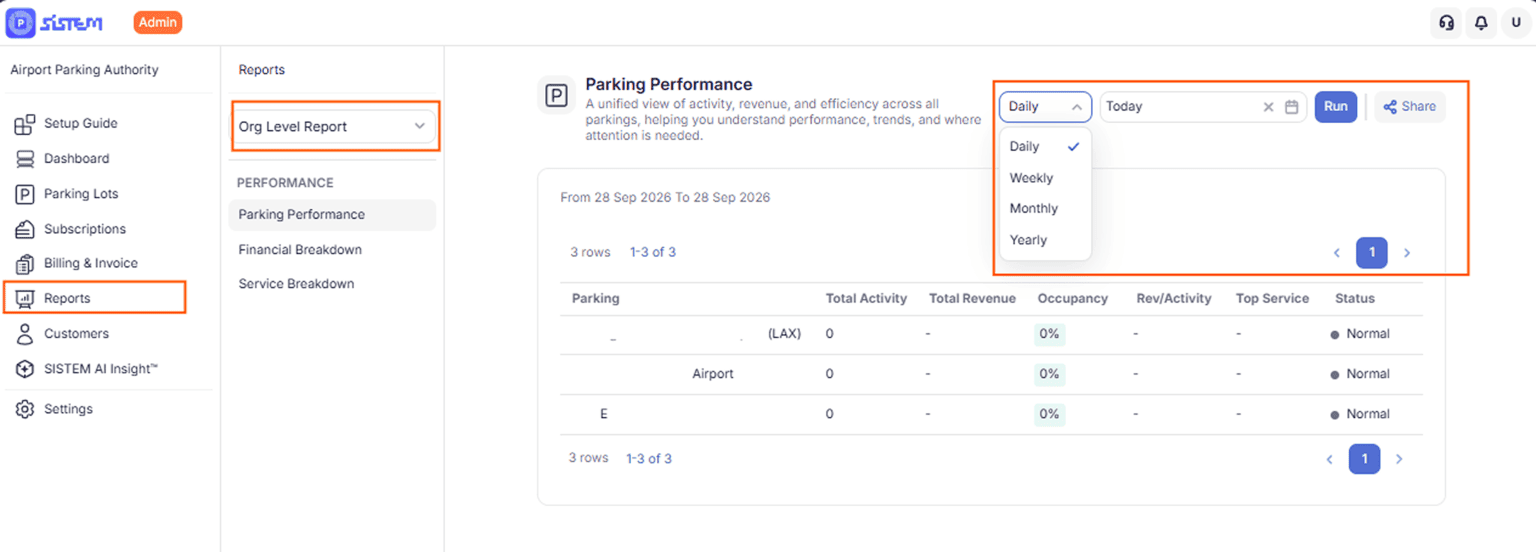
Before sharing or downloading anything, you’ll first choose the time range the report should cover such as Daily, Weekly, Monthly, or Yearly, along with a specific date or date range. Once selected, click Run to load the data for that period.
This matters because whatever you share or download reflects exactly this range — a report generated for a single day will only contain that day’s data, so it’s worth setting the right period before proceeding.
Two Ways to Get Your Report Out
Share Link — sends the report directly to someone, in the format they need, without requiring them to log into SISTEM at all. This is the better option when the report needs to reach someone outside your day-to-day operations — an accountant, an investor, or a stakeholder who just needs the numbers.
Download File — saves the report straight to your own device. This is the better option when you’re keeping a personal copy, archiving records, or planning to bring the data into another tool yourself.
How to Share a Report
Step 1: Set your time range and run the report
Choose Daily, Weekly, Monthly, or Yearly, select the date range, and click Run to load the data.
Step 2: Click Share
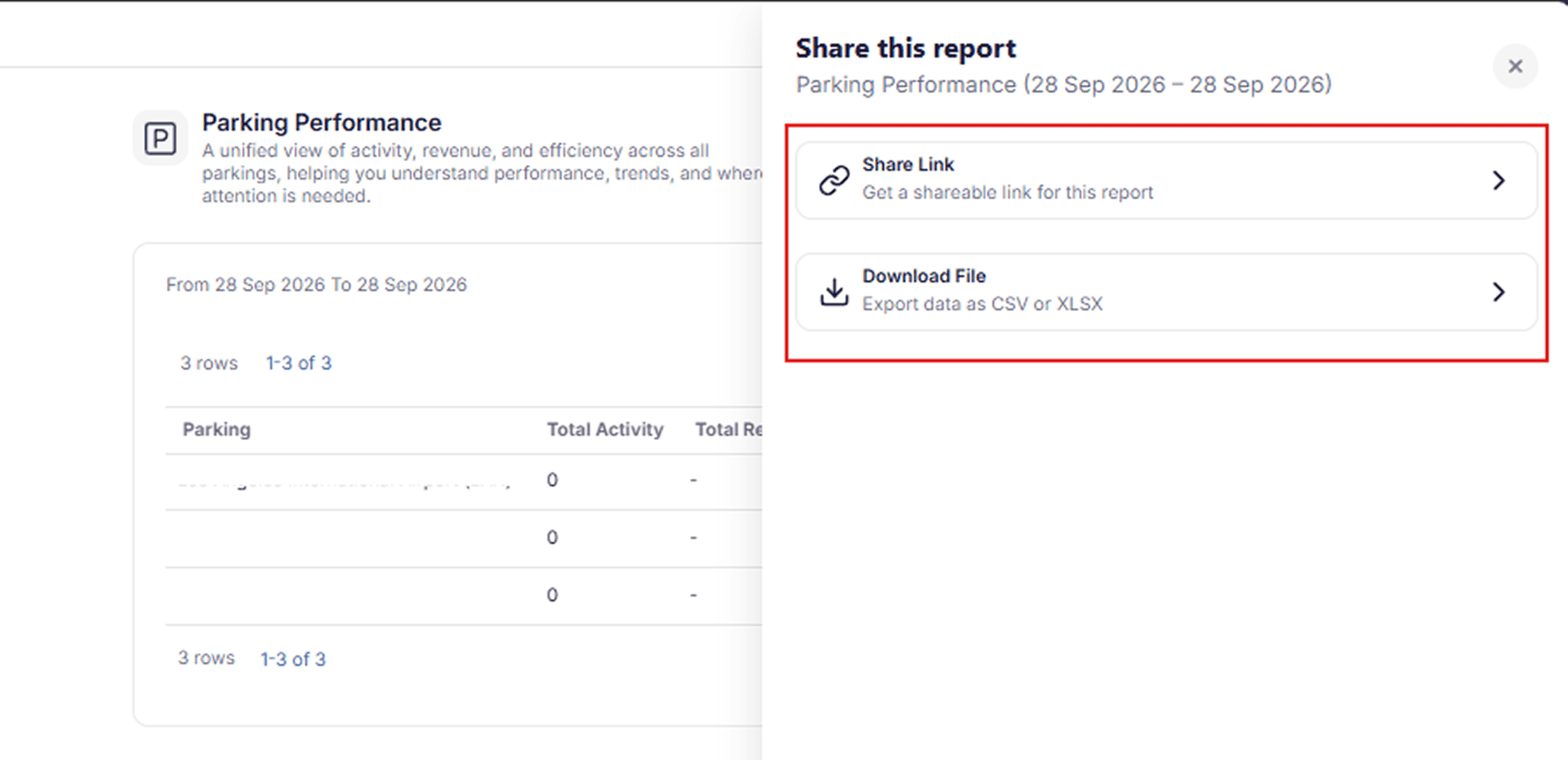
This opens the sharing options for the report.
Step 3: Select Share Link
Choose this option to send the report to someone else.
Step 4: Fill in the details
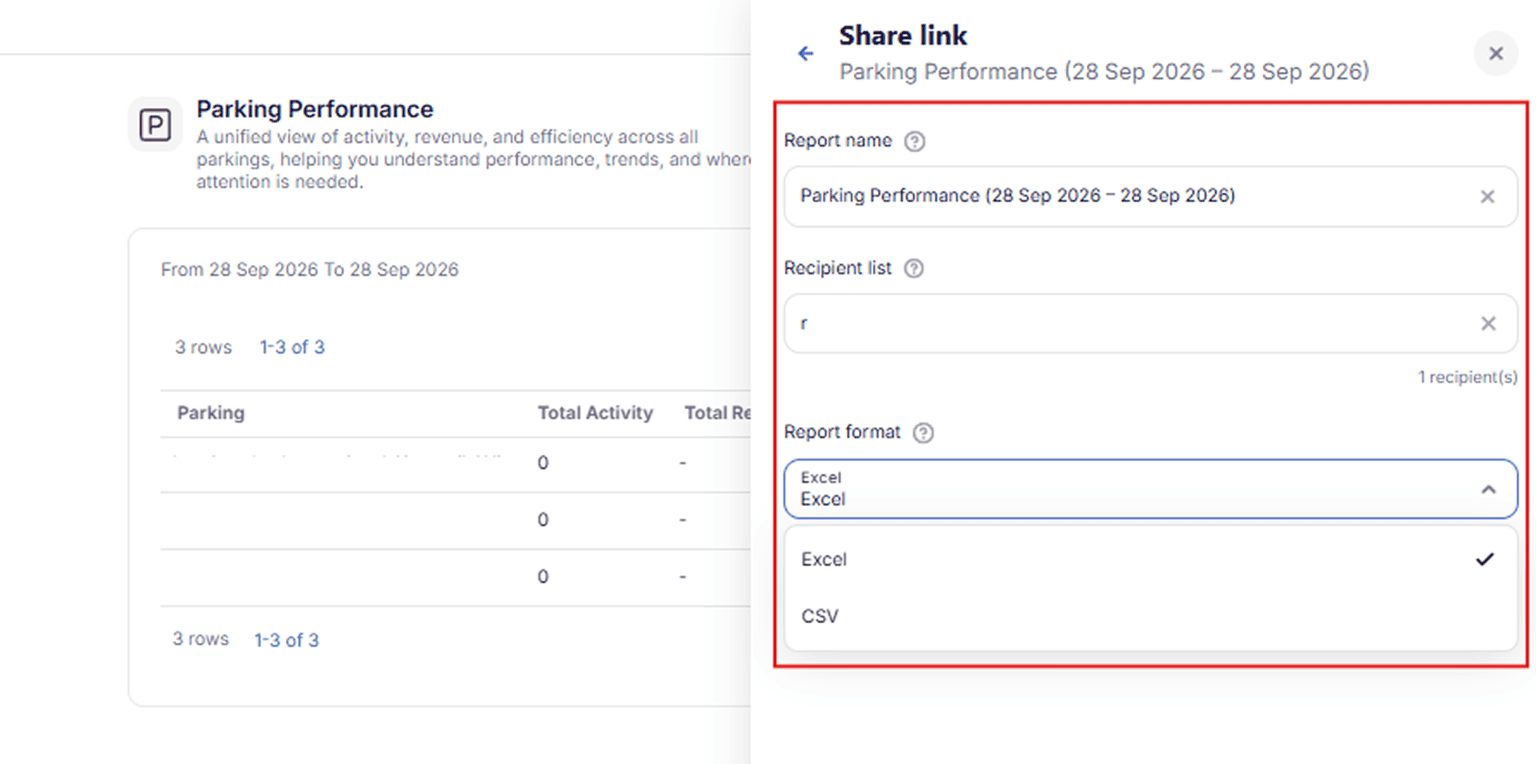
Add a Report name (pre-filled based on the report and date range, but editable), a Recipient list with the email address or addresses who should receive it, and a Report format either Excel or CSV, depending on what the recipient needs.
Step 5: Send the link
Once everything looks right, confirm the report is sent to your recipients in the format you selected.
How to Download a Report
Step 1: Set your time range and run the report
Choose your time range and click Run, just as you would before sharing.
Step 2: Click Share
Even downloading starts from the same menu.
Step 3: Select Download File
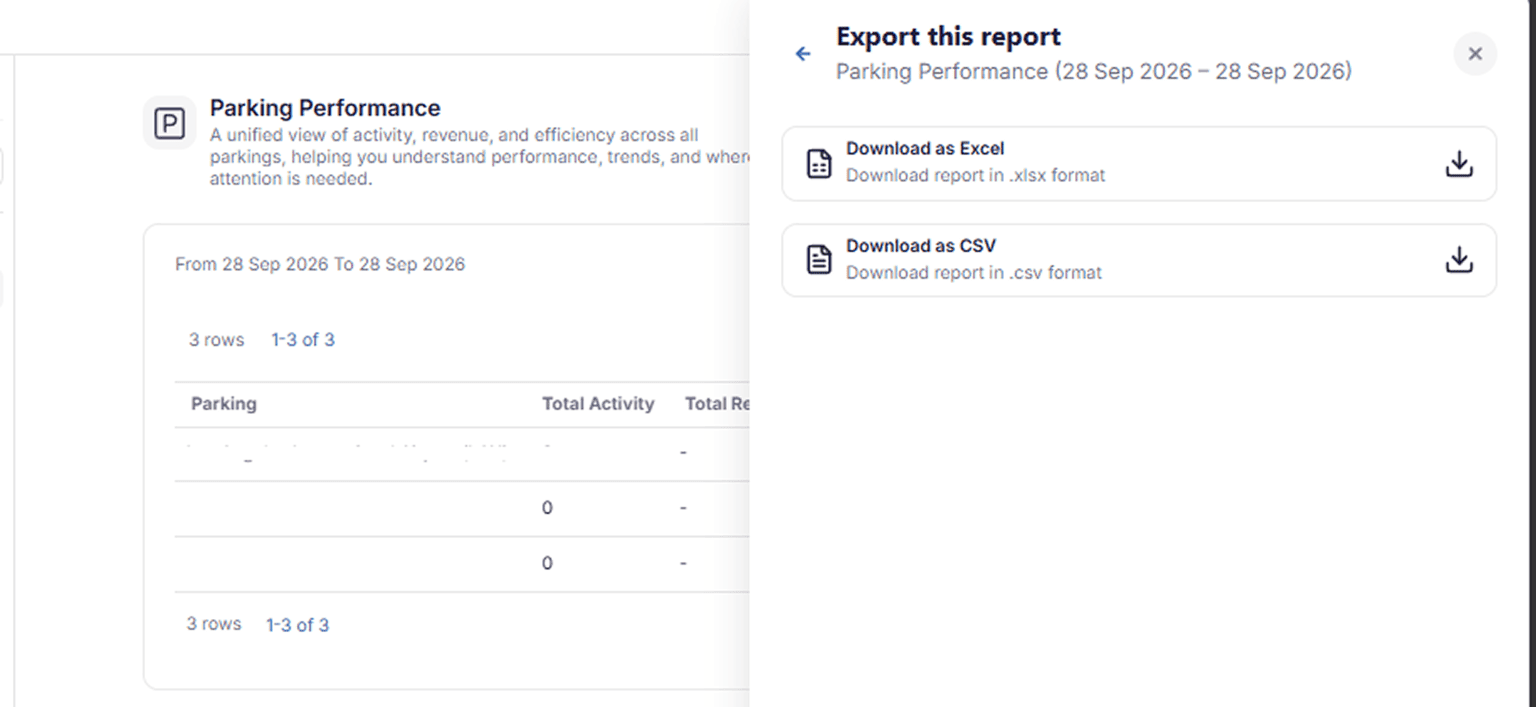
This opens the export options for the report.
Step 4: Choose a format
Select Download as Excel (.xlsx) or Download as CSV, depending on what you need it for.
Step 5: The file downloads to your device
No recipients or extra steps needed, it’s saved directly for you.
Choosing Excel vs. CSV
- Excel is formatted and easy to read directly — a good choice when the report is going to someone who just needs to open it and understand it, like a stakeholder or an accountant.
- CSV is raw data, better suited for importing into another system, spreadsheet tool, or analysis pipeline, a good choice when the data itself matters more than how it looks.
Things to Keep in Mind
- A shared or downloaded report always reflects the time range you selected before running it double-check this before sending or saving.
- Sharing a report doesn’t give the recipient access to SISTEM itself — they only receive the report file or link, nothing more.
- Whether you can share or download a report at all depends on your role and access level : a Full Access user can do both, while a View Only user may only be able to view the report on-screen.
Best Practices
- Double-check the date range before sharing a report sent for the wrong period can lead to confusing or misleading conversations.
- Use Share Link when the recipient doesn’t need SISTEM access it keeps your account access limited to people who actually need it.
- Use Download File when you need a personal copy or plan to work with the data yourself.
- Choose Excel for readability, and CSV when the data is headed into another system.